

The Chicago metro area has the third-highest population of LGBTQ+ adults of any metro area, according to a UCLA survey; however, you’d never guess that as a viewer of the One Chicago franchise.
Despite being three shows strong with a combined total of 38 seasons (39 if we toss in the short-lived Chicago Justice), the One Chicago shows have somehow managed to feature a concerningly low number of LGBTQ+ characters through the years. In fact, Chicago Fire is the only One Chicago show that has even made an effort to feature an LGBTQ+ character in a prominent series regular role through the characters of Leslie Shay, Darren Ritter, and Emily Foster. Representation within the One Chicago franchise, otherwise, has been a box checked via side characters and the occasional guest star.
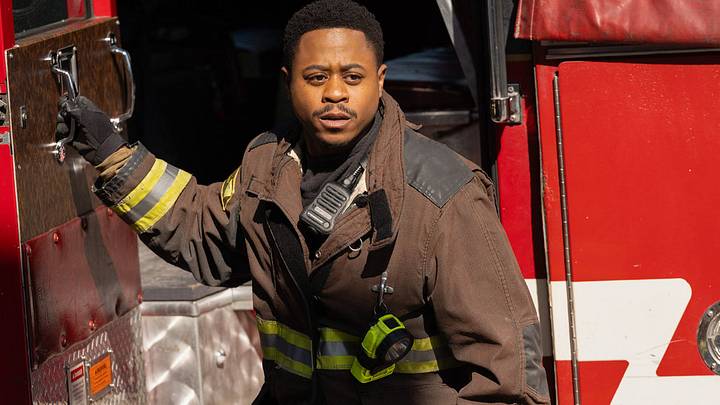
While Chicago Fire has at least included lead characters from the LGBTQ+ community, the show often strayed away from the characters’ romantic lives and exploring meaningful storylines through the characters. Take Ritter, for example. While Ritter was involved in a relationship with police officer Dwayne Morris, their relationship was rarely shown in depth or featured prominently through the show, with most developments happening through passing dialogue rather than fully realized storylines or episodes that centered on their relationship.
If we’re being honest, even Ritter as a series regular character was never fully given the same bigger storylines many of his fellow series regulars were given through the years. Ritter was rarely the emotional center of episodes, lacked season-long arcs that his colleagues were given, and his screen time never quite matched that of his fellow series regulars.
Chicago Fire deserves credit for the representation, but it felt as though the show was simply checking the box of representation more than actually building Ritter into a fully realized, story-driving character. And when it came time to make budget cuts, it was the sole LGBTQ+ character who was written out, erasing the one remaining queer character from the franchise.

Chicago Med, Fire and PD’s lack of LGBTQ+ representation is more than a little disappointing
Chicago is one of the most diverse cities in the country, with a vibrant and visible LGBTQ+ community. That reality should naturally extend into Firehouse 51, the halls of Gaffney, and the precincts of the Chicago Police Department. Instead, LGBTQ+ characters have remained largely on the sidelines, their stories either underdeveloped or entirely absent.
The issue isn’t simply about adding more LGBTQ+ characters for the sake of optics. It’s about giving those characters the same narrative weight, complexity, and emotional depth afforded to their heterosexual counterparts. It’s about allowing them to lead episodes and to exist beyond a single defining trait, something that so many of One Chicago’s competitors do with much more nuance and care.
Shows like Grey’s Anatomy, 911, and Fire Country all feature LGBTQ+ characters in prominent series roles and actually celebrate their queerness. They’re not just there to check a box; they’re fully realized characters whose queerness is part of the show and their stories, not an afterthought. Rather than minimizing their identities, the shows lean into them and let them shape meaningful storylines.
It's disappointing that in a franchise that spans three shows and has nearly 40 seasons between them, there have been just three series regular LGBTQ+ characters featured, and it's time that changes. Imagine what these shows could gain by embracing that opportunity.
At a time when representation across television continues to evolve, One Chicago feels stuck behind the curve. The foundation for meaningful inclusion is there; the franchise has simply yet to fully commit to building upon it. Fans deserve and want to see themselves represented on-screen, and it would be so refreshing to see better LGBTQ+ representation in the new seasons of Chicago Med, Fire, and PD this fall.
 Add us as a preferred source on Google